


The retail world has changed a lot since last year. Today’s consumers don’t think of “online” and “in-store” as separate channels to buy goods. They expect the same speed, convenience and service no matter where they shop.
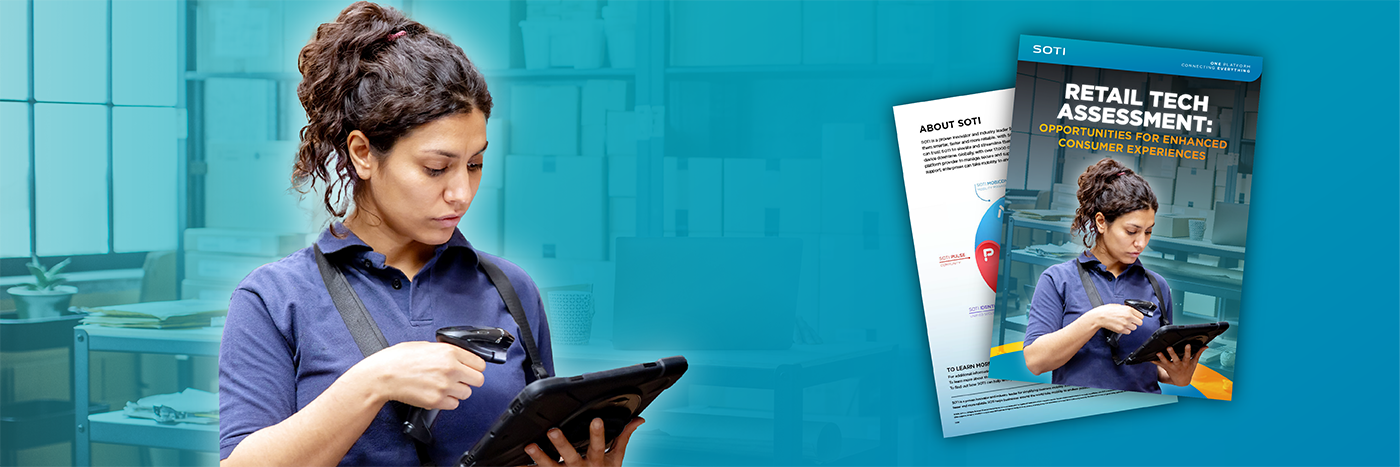
SOTI’s 2026 Retail Report, Retail Tech Assessment: Opportunities for Enhanced Consumer Experiences, looks at what retailers can do to keep up with changing times, improve retail operations and build trust with customers.
This year’s report is our biggest yet. We surveyed 13,000 consumers across 11 countries, including Italy and Spain for the first time. From the research, we uncovered three major trends shaping retail today.
1. The Line Between Online & In-Store Shopping Is Disappearing
Consumers are using every option available, not just one.

Why people shop online:
-
54% choose to shop online for convenience and price.
-
78% value having a choice of online delivery options and ways to return unwanted items.
-
44% turn to online shopping for better product availability.
Why people still shop in stores:
-
69% prefer in-store shopping to see, touch, and try items firsthand.
-
60% want to avoid delivery wait times.
-
43% believe they are less likely to return items if they shop in-store.
Retailers that connect the speed, personalization and convenience of online shopping with the immediacy and human touch of in-store will create a smoother, unified experience for consumers, which is something that they now expect as the norm.
2. Smart Technology Is Powering Retail Success
Technology now drives almost every part of retail.

Retail apps are particularly popular:
-
49% of consumers use them for convenience and to gain access to exclusive savings and points.
-
41% want to checkout faster.
-
36% like the notifications and updates that provide them with information about products and offers.
At the same time, in-store staff need better tools. Nearly a quarter (23%) of consumers who prefer less human interaction when shopping in-store say this is because staff knowledge can be inconsistent.
This highlights why retailers need mobile devices and connected tech that give staff real-time product data. Tools like RFID give retailers instant inventory information, provide faster ways to find items, and enable bulk scanning to speed up checkout.
When retailers use analytics, automation and mobile tech together, they can cut costs, improve productivity and create more personalized experiences.
3. Trust Matters More Than Ever
As expectations rise, so do concerns about safety and privacy.

In addition:
-
41% have been victims of fraud when shopping.
-
53% say they would stop shopping in a store if they felt it was using AI to monitor their purchases.
Consumers want clear communication and strong security. Retailers who protect consumer data and explain how it’s used will earn more trust and loyalty.
Economic Pressures Are Changing How People Shop
Because of global economic challenges:
-
82% of consumers globally are taking cost-cutting measures.
-
41% are reducing non-essential purchases.
-
36% are actively seeking out promotions, loyalty rewards or price-matching offers.
-
31% are shopping online to compare prices and get better deals.
-
26% are switching to discount retailers or private-label brands to save money.
-
20% are delaying or cancelling a major purchase due to uncertainty.
The Future of Retail: Convenience, Personalization & Trust
Retailers now have a chance to rethink what great shopping looks like. The future will be built on smooth, connected shopping experiences, smart technology, helpful, well-equipped staff, and strong security and data protection.
Want the Full Report?
Download the 2026 Retail Report to see all the insights, including details from each country and examples of how retailers can improve their operations.